Gov. Brian Kemp called state lawmakers for a special session on June 17 to reshape how Georgians vote and to redraw the state’s political maps after last month’s U.S. Supreme Court decision gutted a section of the Voting Rights Act prohibiting racial gerrymandering.
The move, announced Wednesday, thrusts Kemp and his Republican allies back into the center of two of the most combustible debates in Georgia politics a day after the June 16 primary runoffs cement nominees for every statewide office.
The first is a looming crisis over Georgia’s voting system. The second is a redistricting fight over congressional and legislative boundaries for the 2028 elections.
Kemp has ruled out changing the maps for this year’s races, but Republicans are moving to act now while they are certain a GOP governor can sign the new districts into law.
A special session is required to address a statutory July deadline lawmakers left unresolved when they adjourned in April.
Two years ago, Republicans passed a law banning the use of QR codes to tally votes used in Georgia’s voting system, responding to years of pressure from activists who distrust the technology because voters cannot directly read the bar codes tabulated by scanners. But counties are still legally required to use those same machines, and lawmakers never approved money to replace them statewide.
A bipartisan House-backed proposal would have delayed the transition to a new system until 2028 to avoid changing voting systems in the middle of a major election cycle. The Senate never took up the measure. That leaves Georgia on track for what lawmakers from both parties have described as a legal and logistical mess beginning July 1.
A political map overhaul
The announcement of the special session comes weeks after the Supreme Court’s ruling in a Louisiana case opened the door for Republican-led states across the South to revisit congressional maps.
Kemp has already ruled out redrawing districts for the 2026 election cycle, noting candidates qualified months ago and voting is already underway. But he also said Georgia needs new political maps before 2028. Georgia Republicans have waged an intensifying behind-the-scenes fight over how aggressively to move.
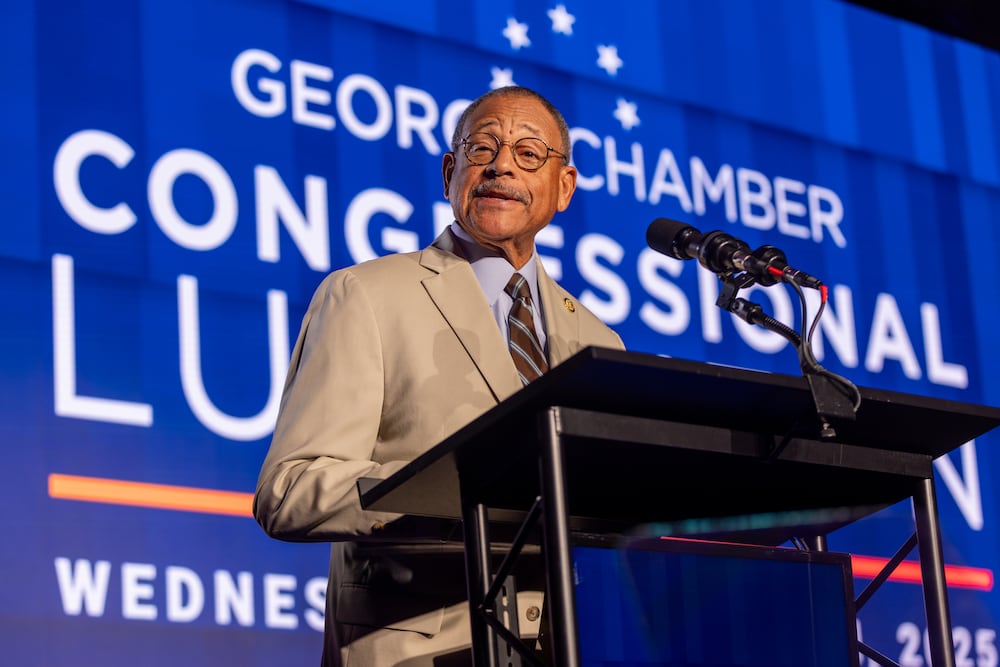
One of the most likely targets of the new maps is longtime Democratic U.S. Rep. Sanford Bishop, who is serving his 17th term in a southwest Georgia district that is one of the last rural Black-majority political seats in the Deep South.
Credit: Arvin Temkar/AJC
Credit: Arvin Temkar/AJC
Republicans have long viewed Bishop’s district as one of their best pickup opportunities outside metro Atlanta and see the Supreme Court ruling as a chance to strengthen the GOP’s current 9-5 edge in Georgia’s congressional delegation.
But Republicans could also target metro Atlanta’s boundaries in search of another seat. That would carry risks. An aggressive redraw could dilute GOP voting power elsewhere, and some party leaders are urging caution rather than overreach.
Kemp has faced pressure to redraw the maps for the midterms after Republican governors in several other Southern states moved quickly to revisit their maps. But he’s ruled out a revamp for this year, noting that hundreds of thousands of Georgians have already cast early votes ahead of next Tuesday’s primary.
Legal experts have warned that altering districts for this year’s elections would almost certainly trigger lawsuits and electoral chaos.
The timing of the special session adds further complications.
Calling lawmakers back before the June runoff would have risked pulling candidates off the campaign trail during the most intense stretch of the election season. But waiting until after that vote means lawmakers will convene under the Gold Dome as Atlanta prepares for a flood of World Cup events and international visitors through late June and early July.
At the same time, Kemp is moving to settle the next redistricting fight before he leaves office in January.
If Republicans pass new districts this year, they can guarantee a GOP governor signs the maps into law. Waiting until next year could risk a veto from a Democratic successor if Republicans lose the governor’s mansion.
Democrats have framed the effort as a preemptive power grab designed to lock in Republican control before voters have their say.
This story has been updated to clarify the aims of a proposal to address legal issues with the state’s voting system that passed the Georgia House but later died in the Senate.
Staff writer Caleb Groves contributed to this story.
About the Author




Keep Reading

The Latest

Featured