


The weathered warehouses sprayed with graffiti south of downtown Atlanta look much as they did when Hollywood used them for battle scenes years ago in the postapocalyptic film series “The Hunger Games.”
Two redevelopment efforts for the 20-acre Murphy Crossing site, the former home of the Georgia State Farmers Market, failed before getting off the ground.
But despite the high-profile setbacks, Beltline officials pledge that the project will move forward and deliver new housing, retail and other amenities to one of the trail loop’s largest development sites.
“We see this as a gathering place, really bringing the energy off of the Beltline,” Ryan Snodgrass, a senior urban designer and planning consultant for architecture firm Perkins & Will, told neighbors at a meeting last week when discussing Murphy Crossing.
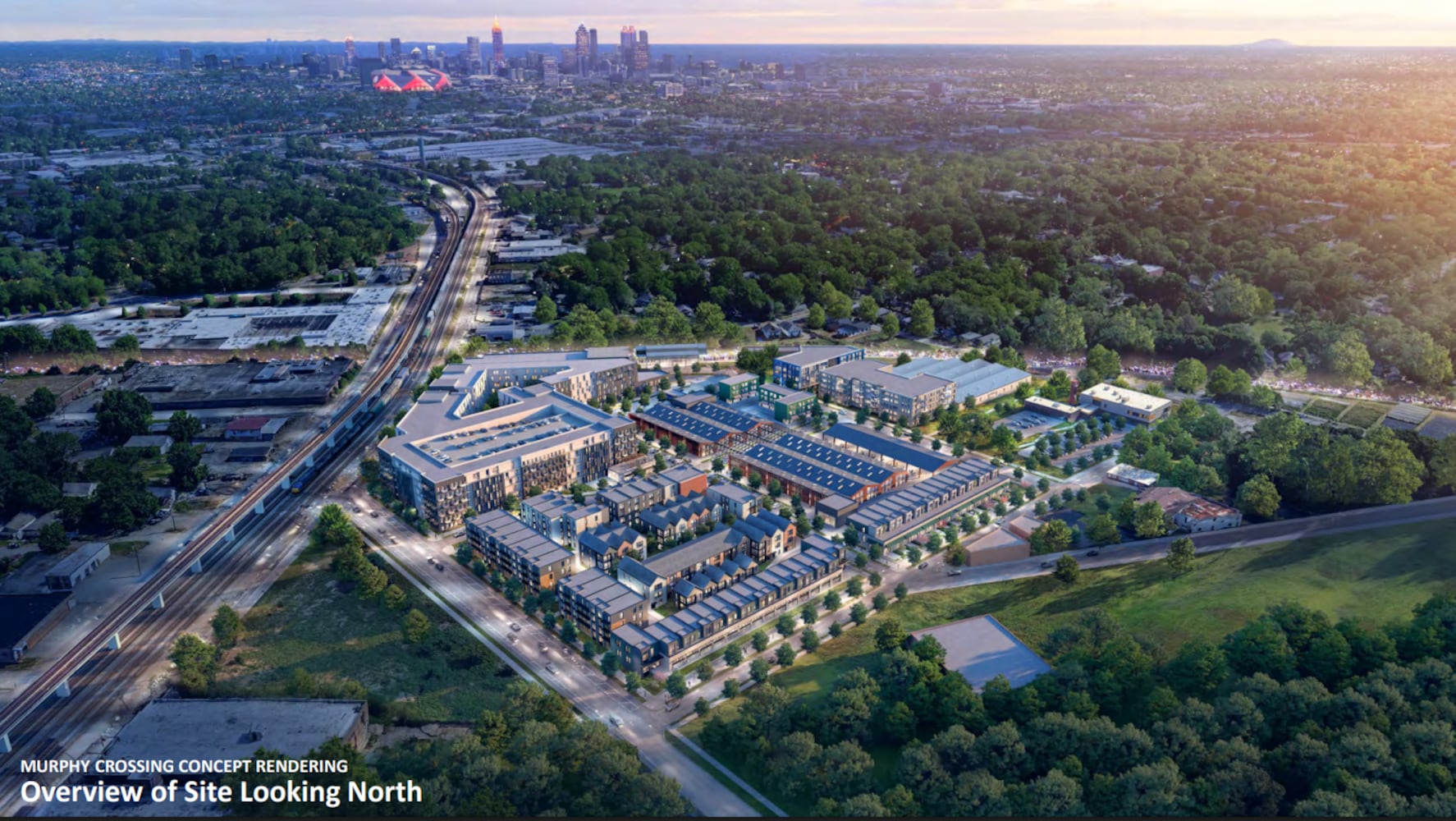
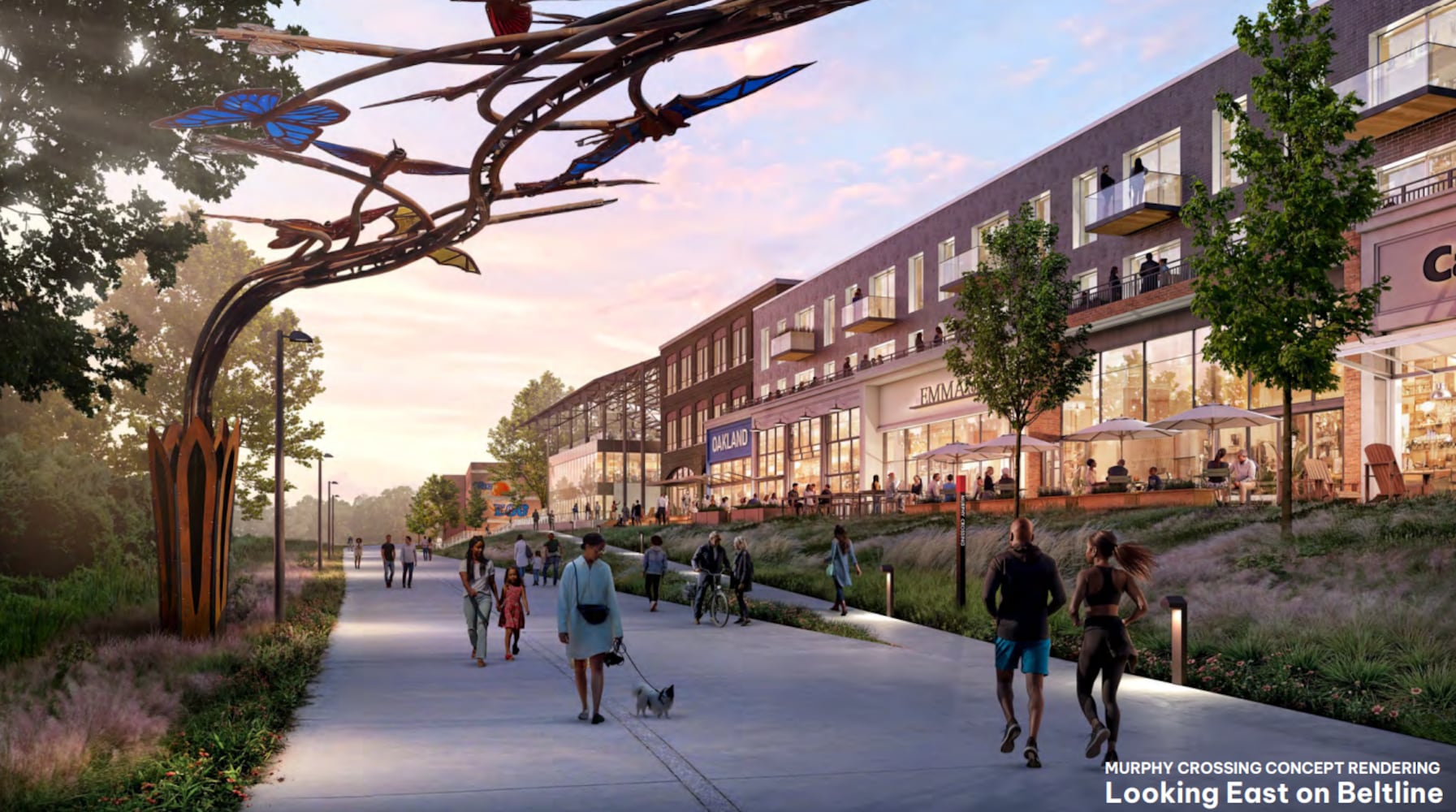
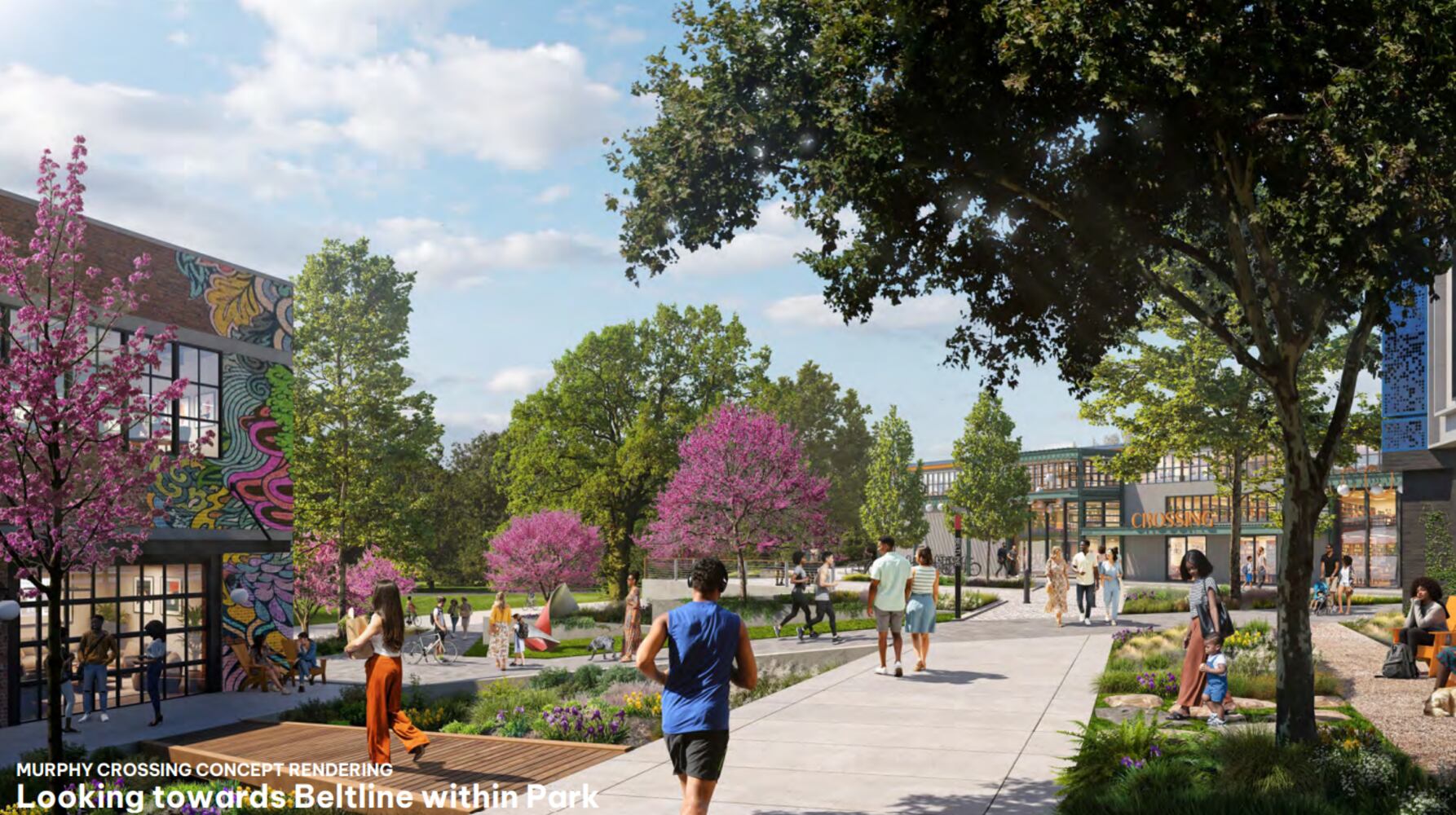
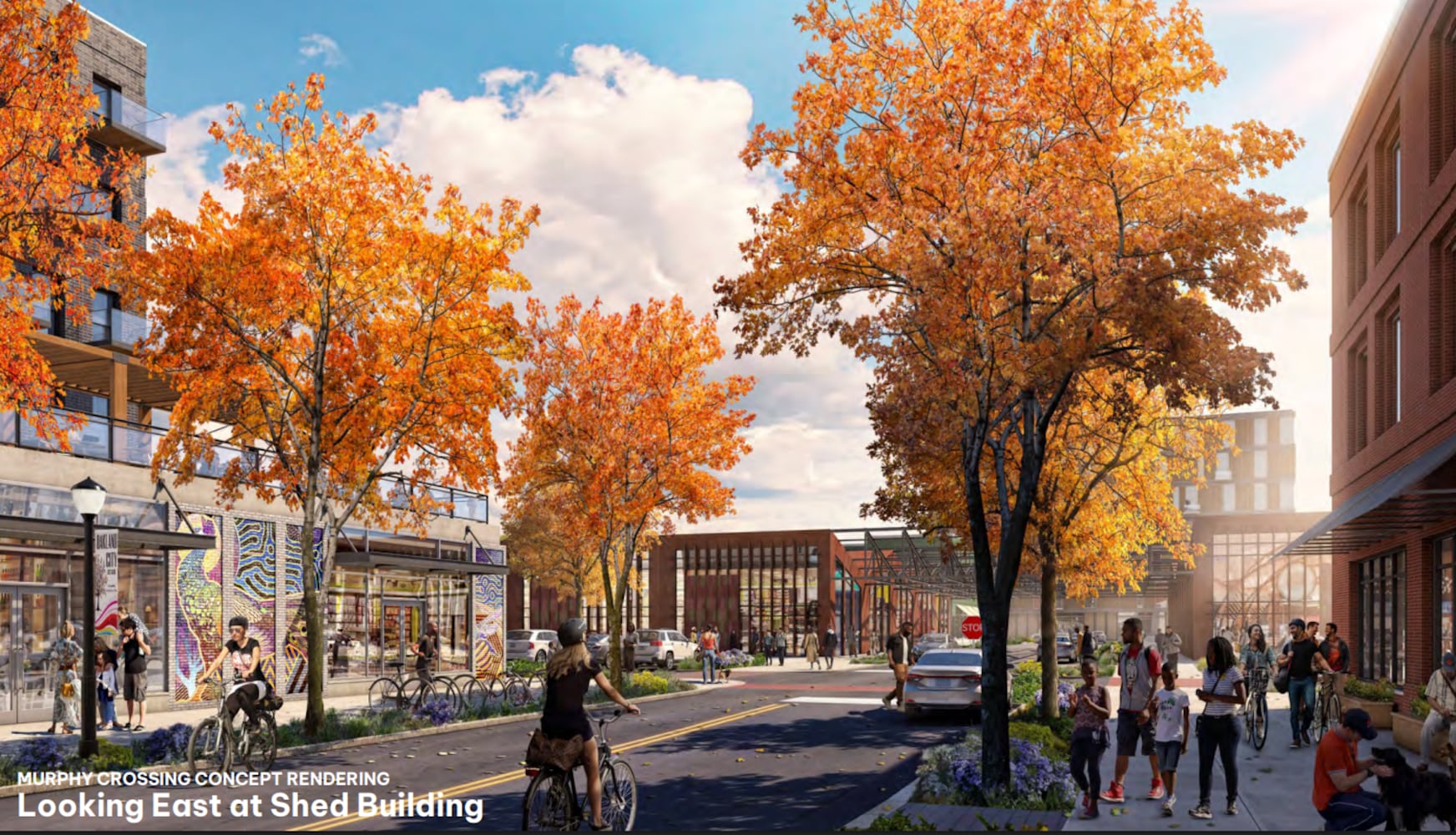
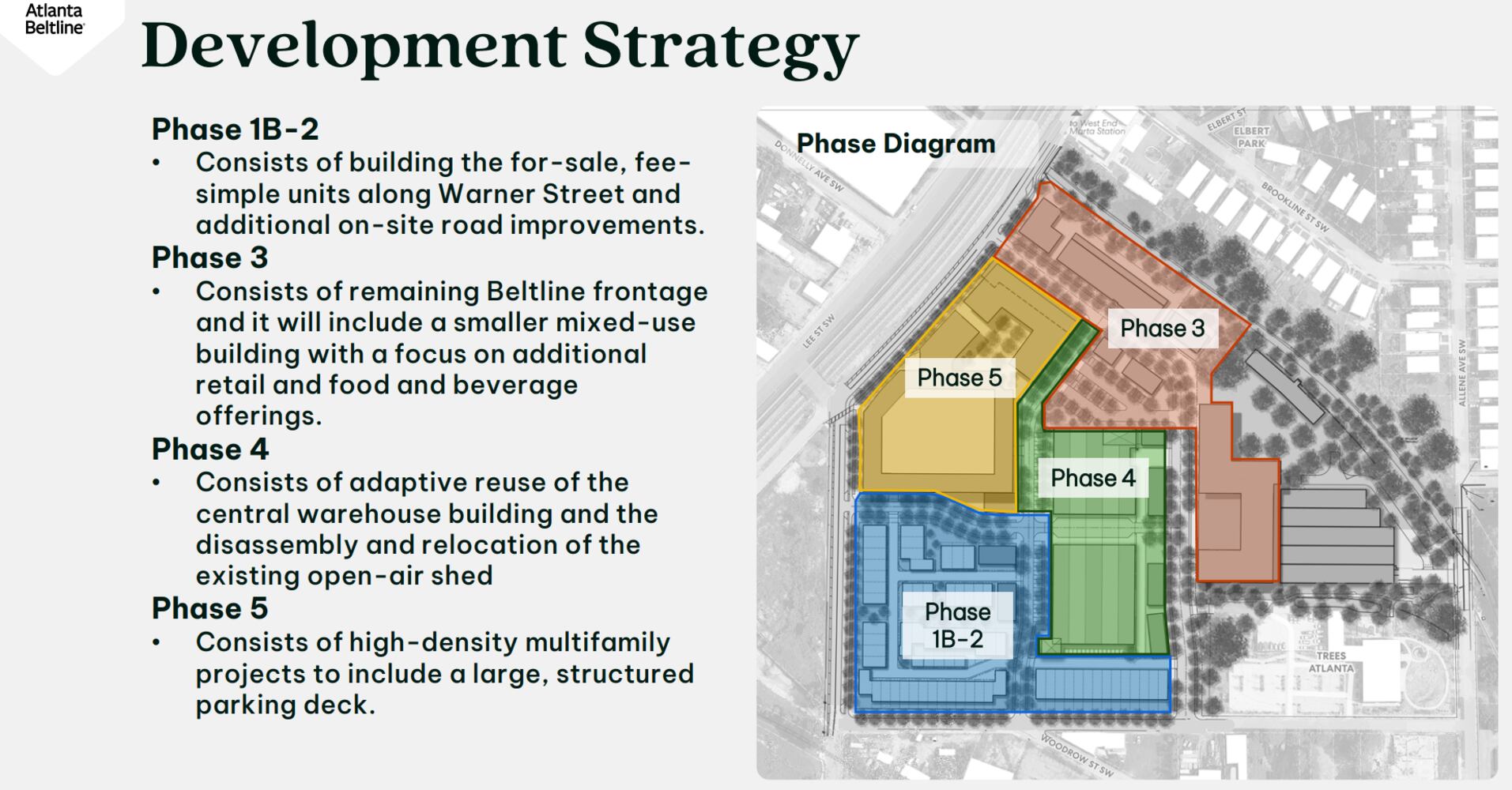
In recent days, Snodgrass and Beltline leaders unveiled their latest vision for the site off Murphy Avenue, laying out a five-phase development plan. Renderings incorporate the existing warehouses in a near-unrecognizable fashion, showing parts of them converted into shops, offices, housing and light industrial spaces.

Credit: HYOSUB SHIN / AJC
Credit: HYOSUB SHIN / AJC
Many questions on the project remain, including how it will connect to a proposed infill MARTA station and which developers will actually build it. But Dennis Richards, vice president of housing policy and development for the Beltline, said the updated vision and efforts to rezone the site show the city remains committed to moving this project forward.


“The Beltline has recently completed the entitlement process for Murphy Crossing and are now finalizing the Phase 1 implementation timeline,” Richards told The Atlanta Journal-Constitution in a statement.
Murphy Crossing acts as a lynchpin property at the intersection of the Oakland City, Adair Park and Capitol View neighborhoods. The project lies between the West End and Oakland City MARTA stations and also near the bustling Lee + White development, home to breweries, restaurants and workspaces.

Credit: Hyosub Shin/AJC
Credit: Hyosub Shin/AJC
The Beltline acquired the abandoned site in 2018 as its largest foray into real estate development beyond its trail network, which had already begun transforming areas along its 22-mile loop.
The first redevelopment effort never got past the initial request for proposals, which was withdrawn. A second attempt led to a partnership with Arizona-based Culdesac and Atlanta-based Urban Oasis Development, but the project imploded in high-profile fashion early last year.
The separation came after more than two years of work. It not only sent the project back to the drawing board, but the fallout between the developers and the Beltline boiled over into the public eye, raising concerns among Murphy Crossing’s neighbors.
Andrea Foard, Beltline senior development manager, said the agency has spent the past 14 months moving things forward behind the scenes. Those developments were first covered by Urbanize Atlanta.
“With 20 acres, we’re not going to develop this all at one time,” Foard said.
The Murphy Crossing site got its zoning in order, completed a state infrastructure review called a Development of Regional Impact and underwent a full analysis of all its buildings and utilities.
“There’s a lot of buildings, a lot of existing asphalt and a lot of utilities that were really hard to find,” Kenneth Wood, CEO of civil engineering partner Planners and Engineers Collaborative, said at last week’s meeting. “As you can imagine, with how long it’s been there and the history, it’s so amazing, but it also makes it really intricate to be able to go find everything that’s under the ground.”
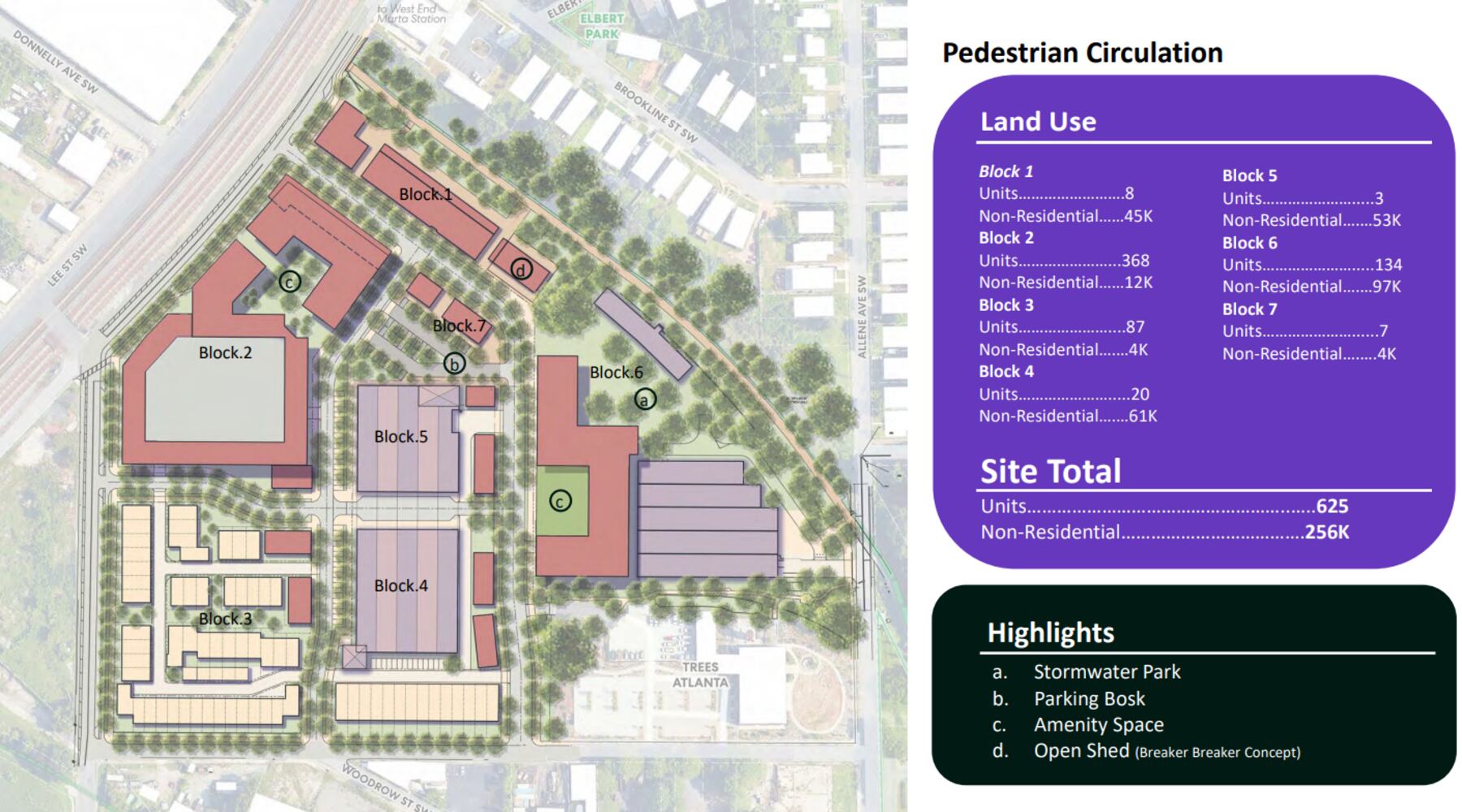
The resulting plan incorporates four existing warehouses into the design. The entire master plan includes 625 residential units, 82,000 square feet of commercial space, 70,000 square feet of retail, 103,000 square feet of light industrial space and more than 1,700 parking spaces.

Credit: Courtesy of Atlanta Beltline Inc.
Credit: Courtesy of Atlanta Beltline Inc.
The residential component is a significant decrease from the 1,100-unit concept included in the prior development vision. Richards said it was “right-sized” based on an “updated feasibility analysis and a more balanced phasing approach.” Snodgrad added that the light industrial use shouldn’t worry neighbors because the nearby Lee + White mixed-use district has the same zoning.
“We are required to have a certain amount of light industrial,” he said at the meeting. “I wouldn’t be scared by that, and I hope you are not because … that can be anything from a veterinarian clinic to a barber shop, all the way to some maker spaces.”

Credit: Courtesy of Atlanta Beltline Inc.
Credit: Courtesy of Atlanta Beltline Inc.

Credit: Courtesy of Atlanta Beltline Inc.
Credit: Courtesy of Atlanta Beltline Inc.
Demolition work is expected to begin later this year as part of Phase 1. A request for proposals to select a development partner is also expected later this year, but a timeline for construction has not been released.
Richards added that the Murphy Crossing development will not impact the proposed infill station intended to connect to the project, saying those “are separate efforts with distinct processes and timelines.”
About the Author




Keep Reading

The Latest

Featured
