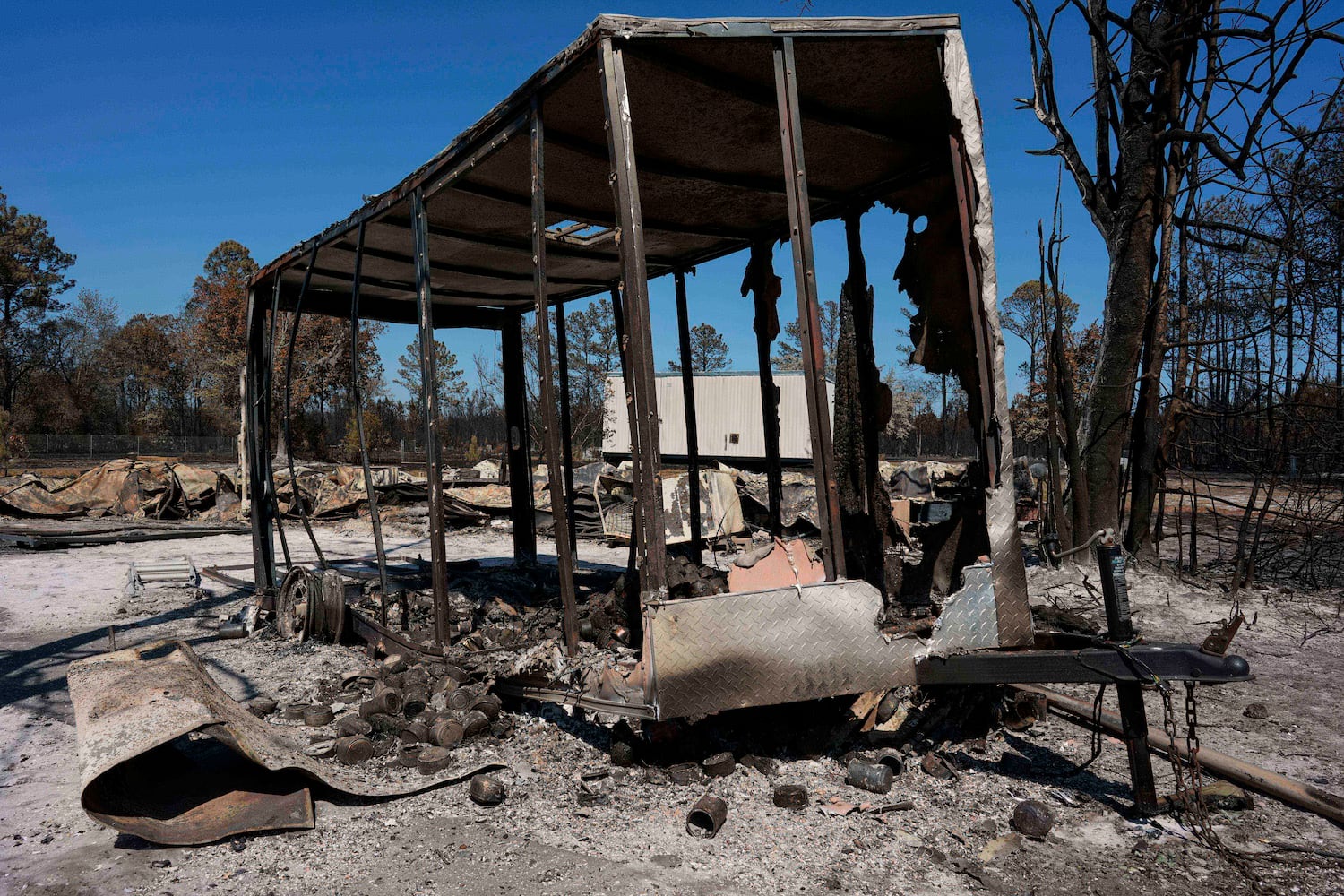

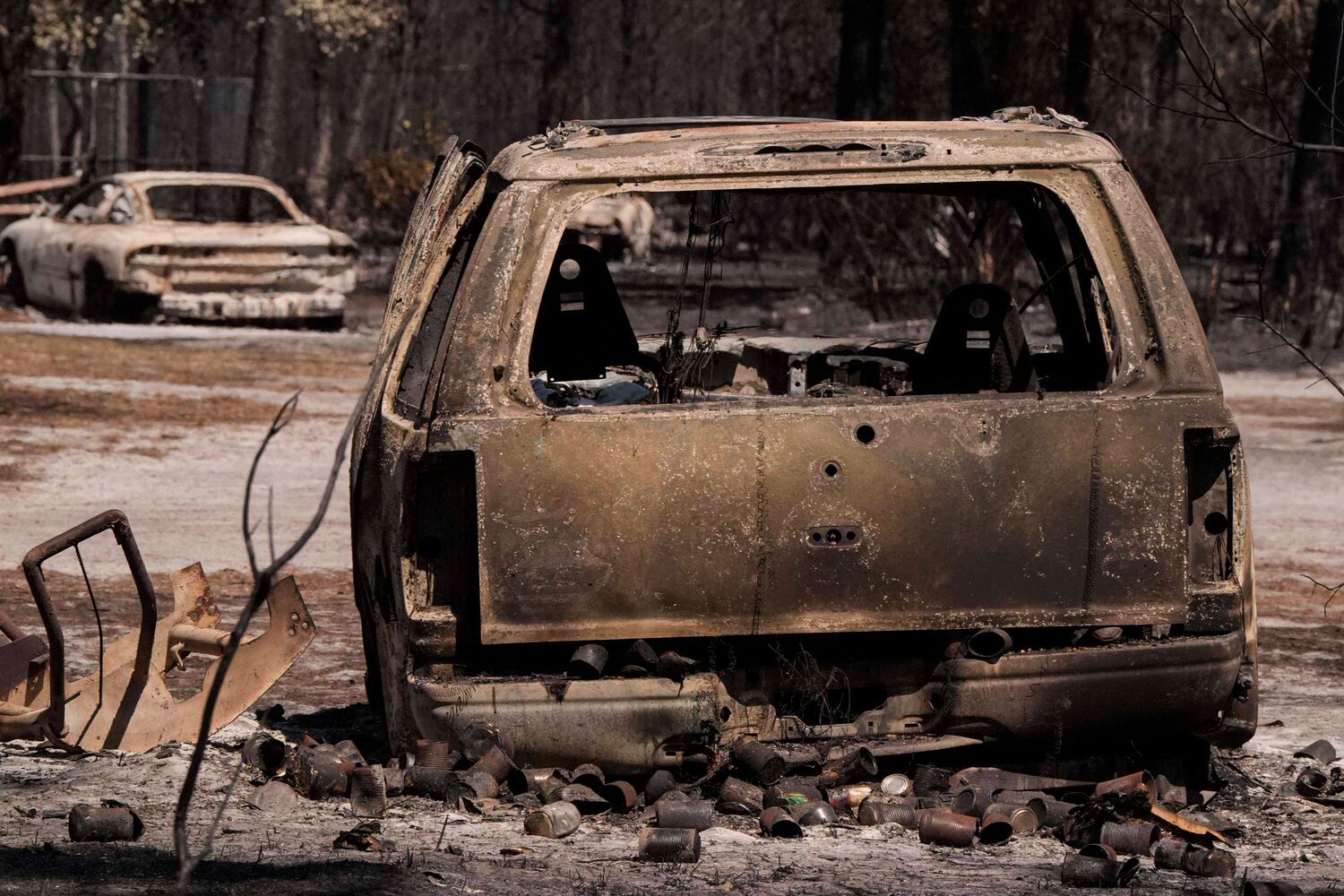
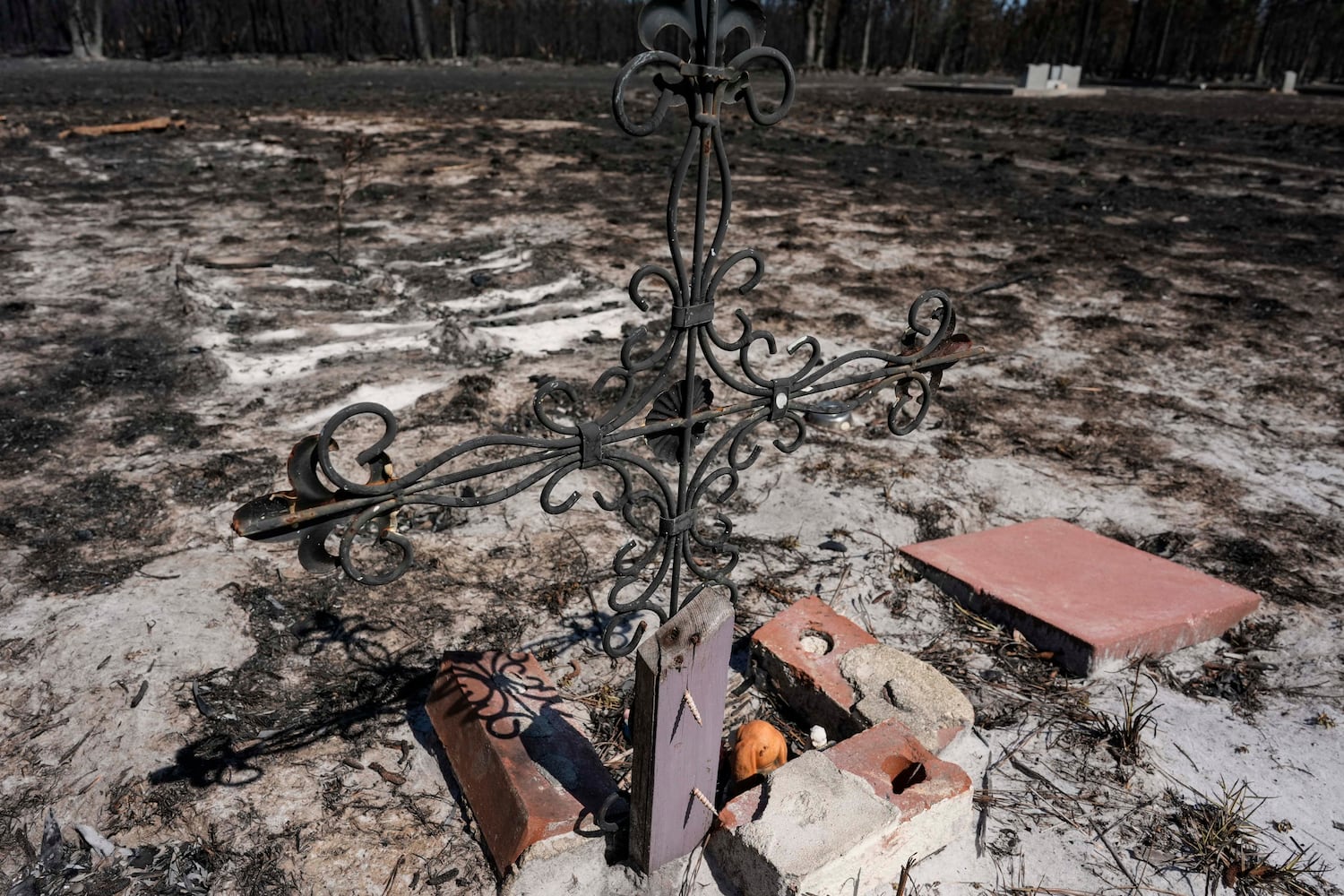
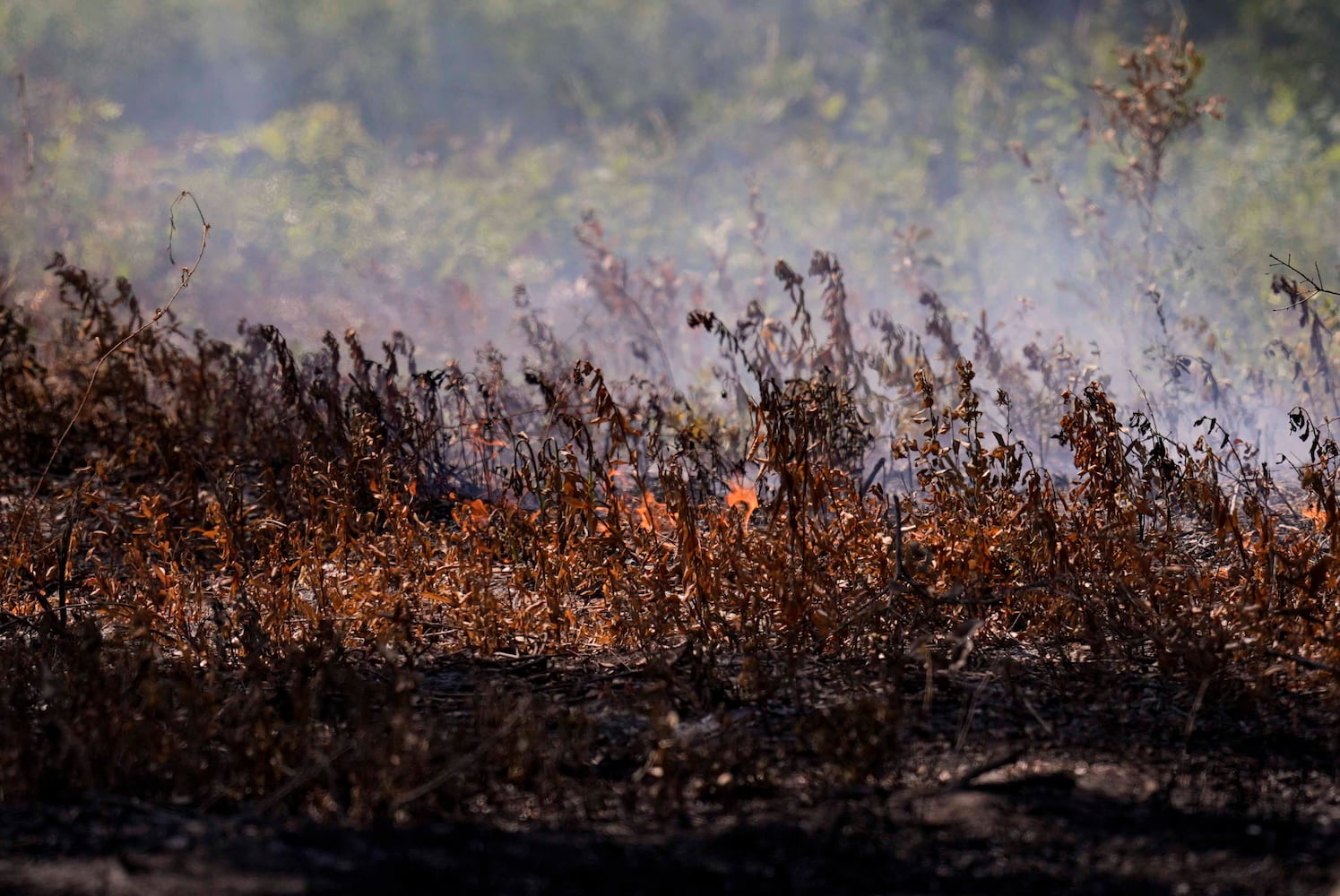

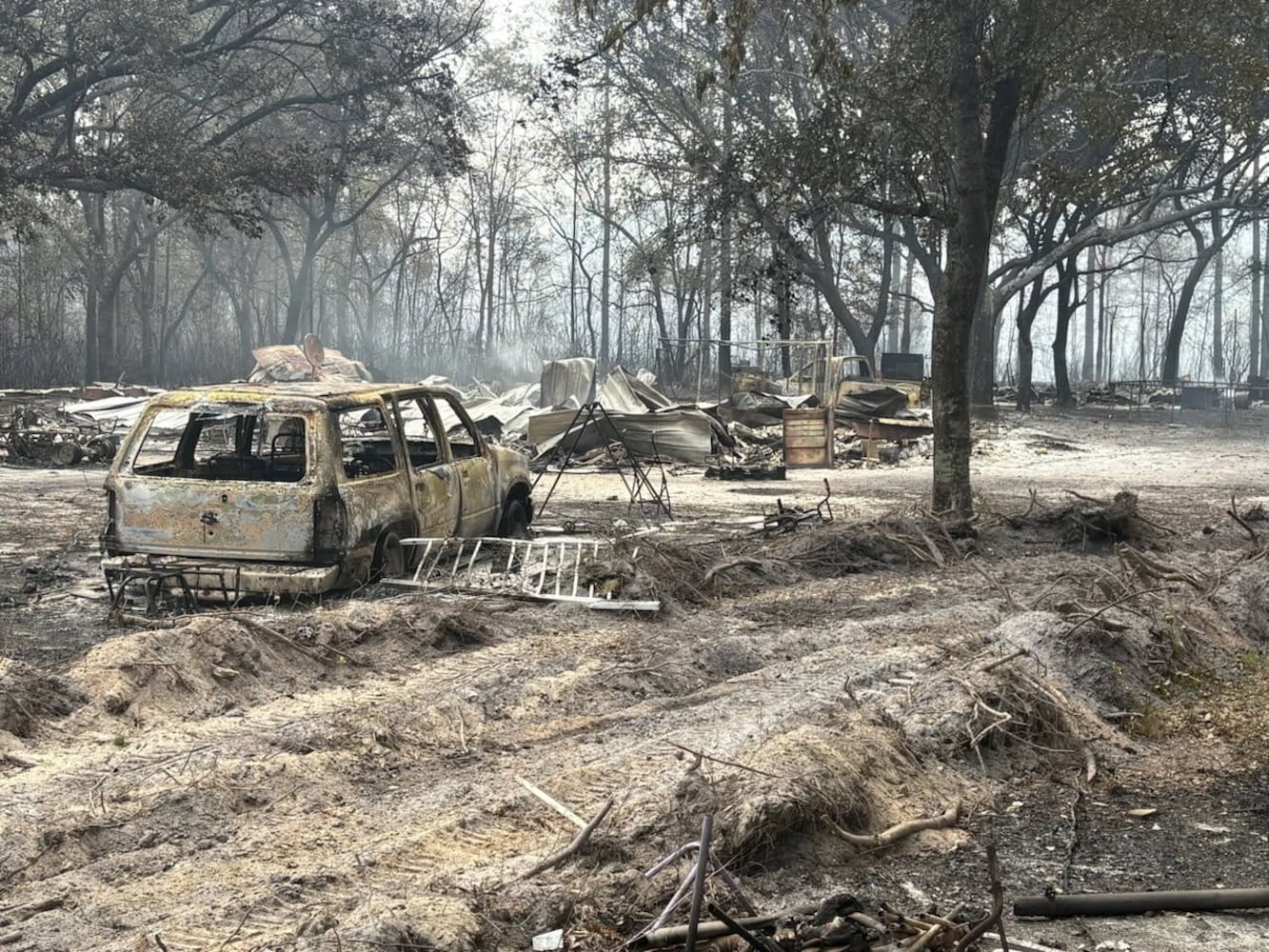
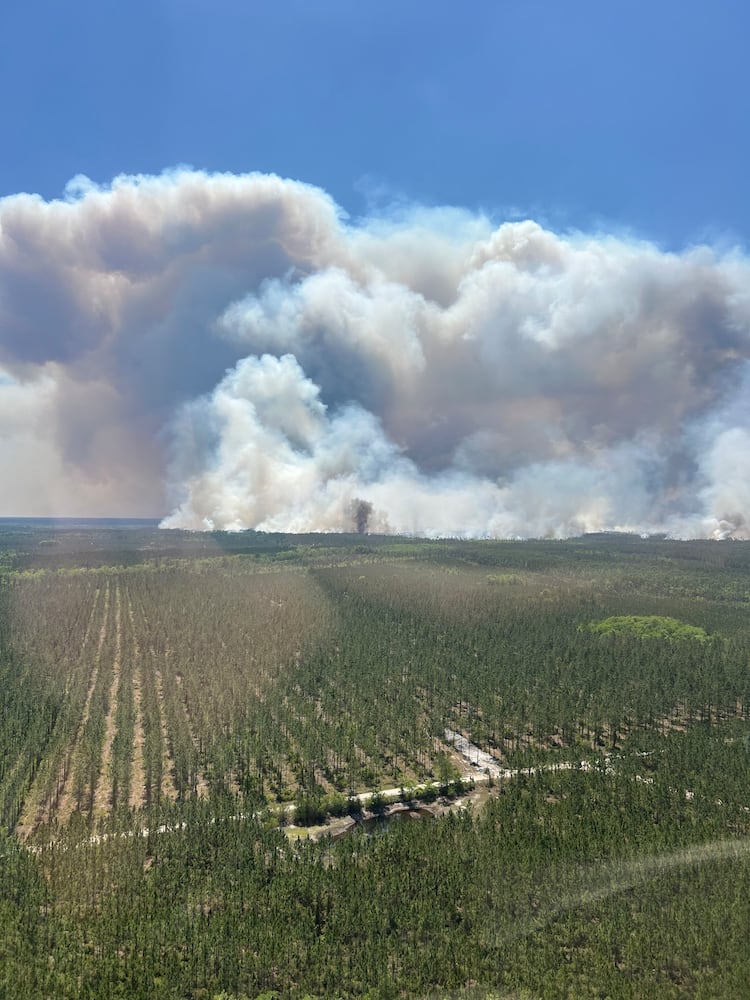
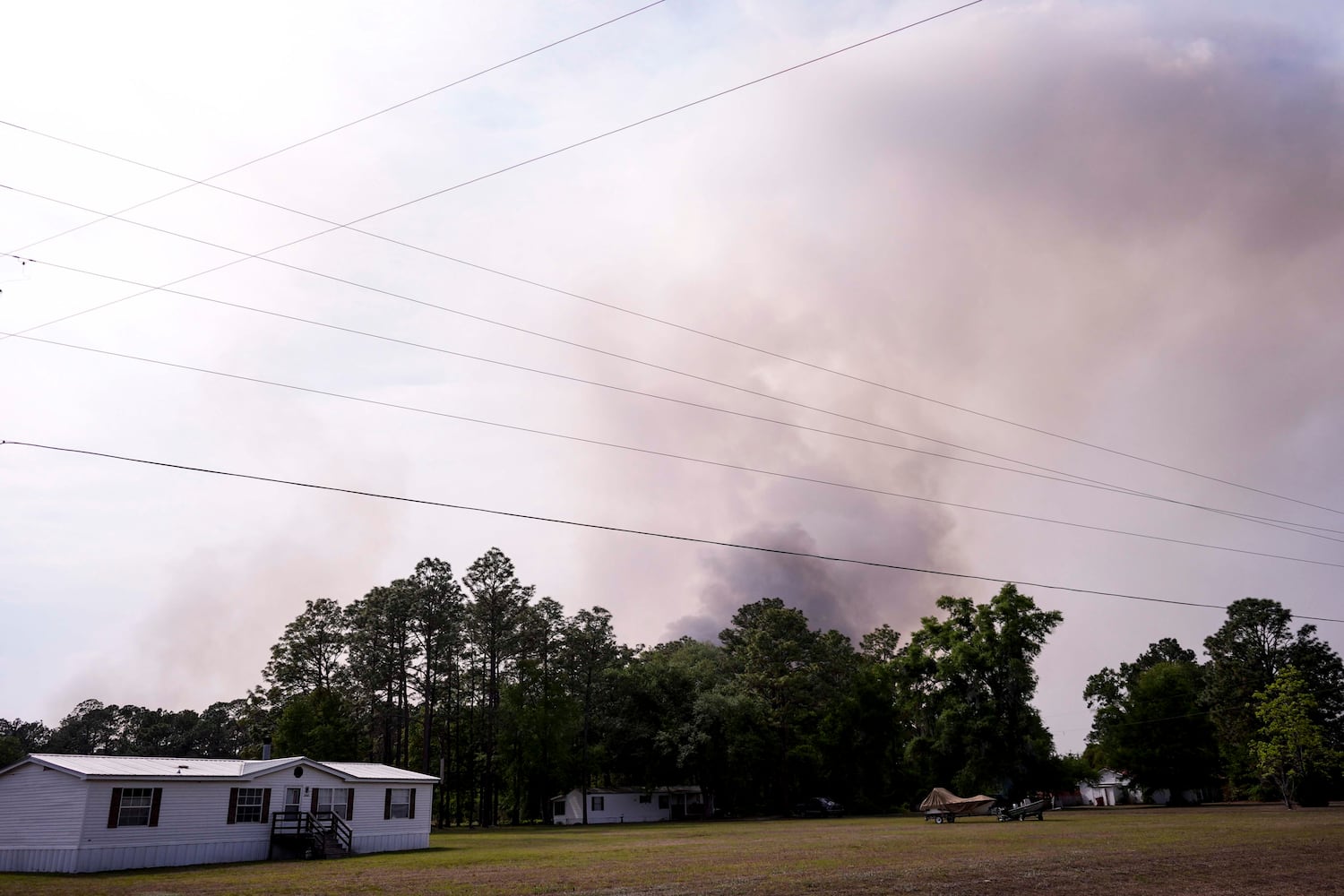
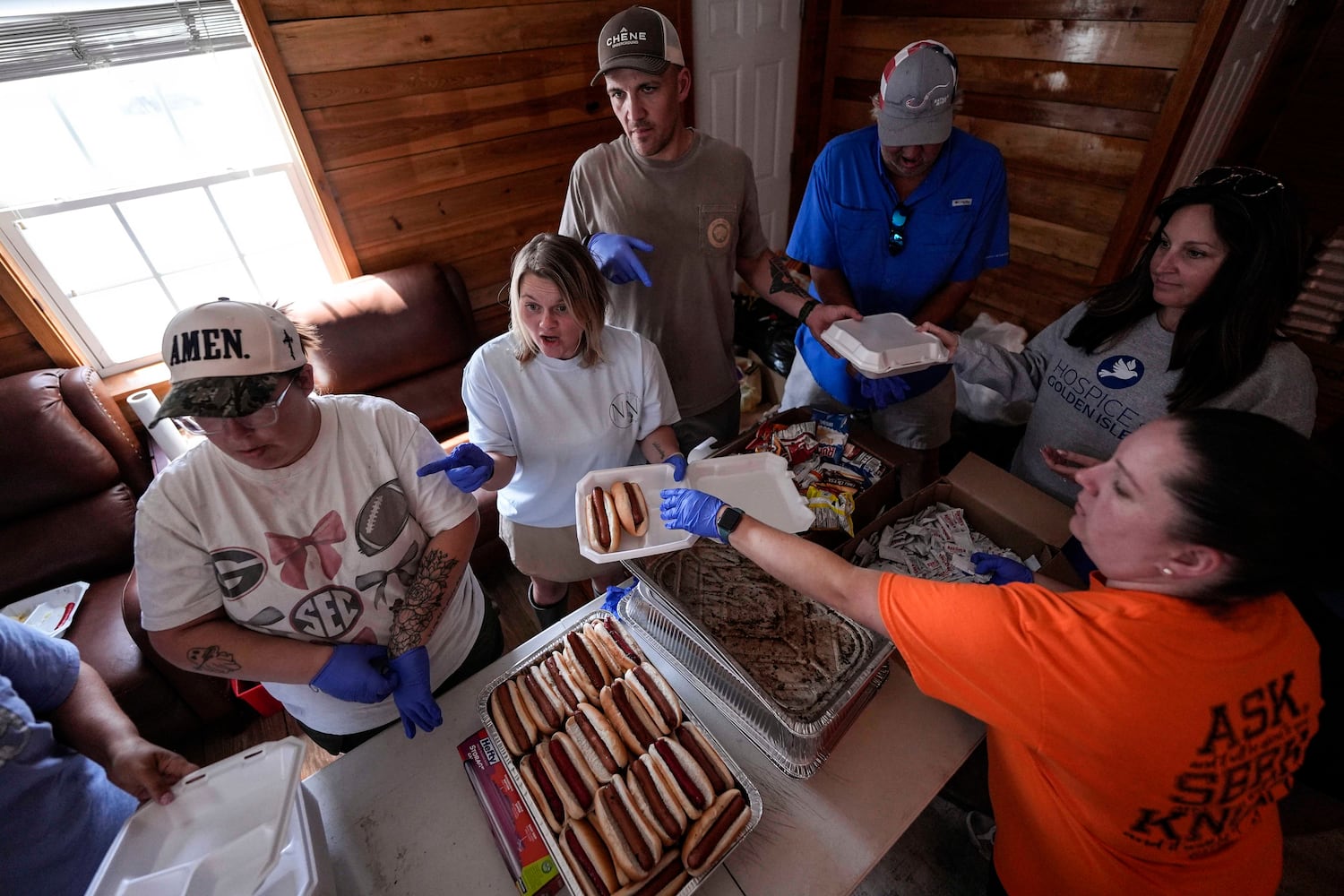
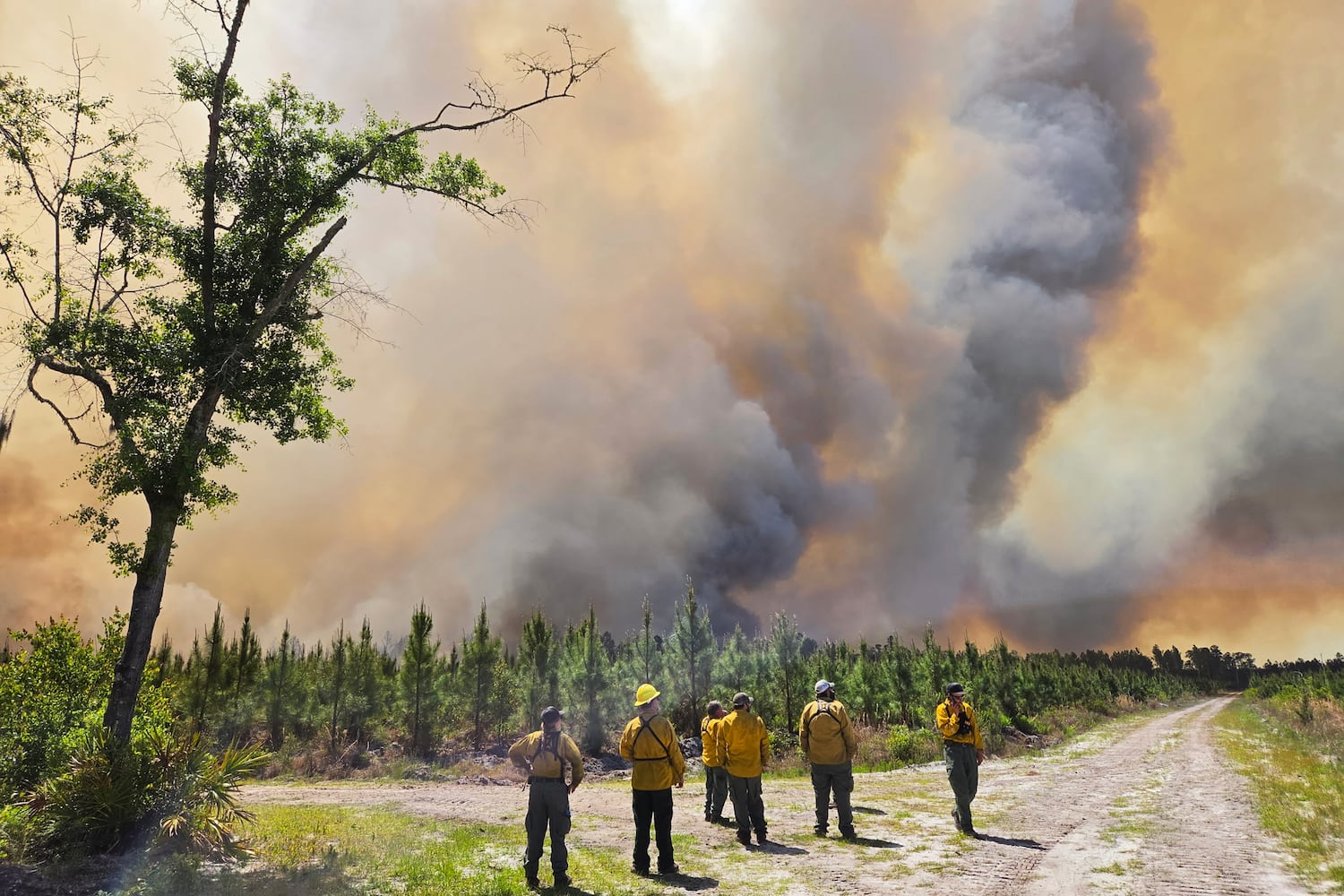
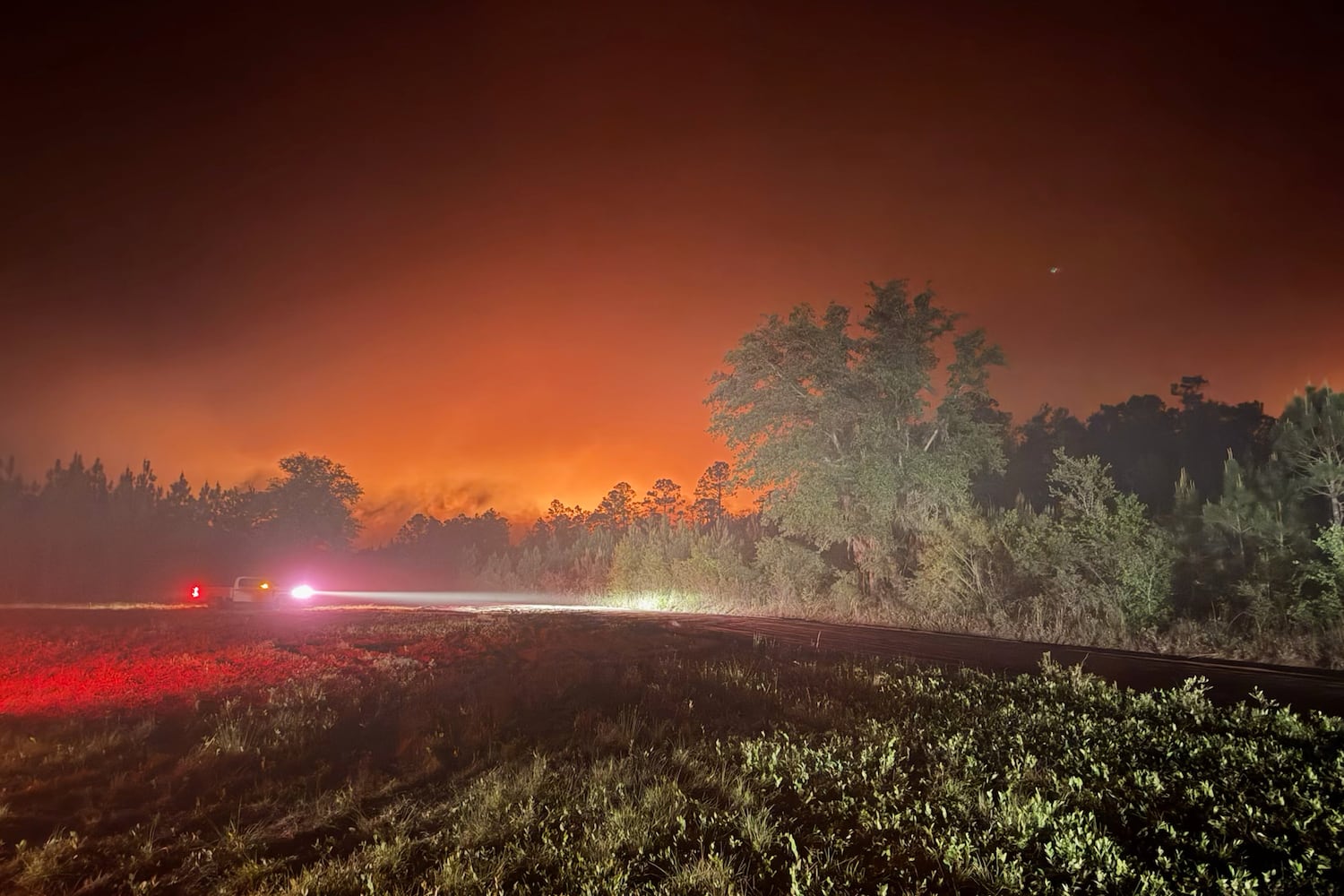

Georgia Gov. Brian Kemp on Tuesday, for the second time in recent days, toured scorched and burning stretches of the state’s drought-stricken southeastern corner where wildfires over the course of a week and a half have charred some 55,000 acres and consumed more than 80 houses.
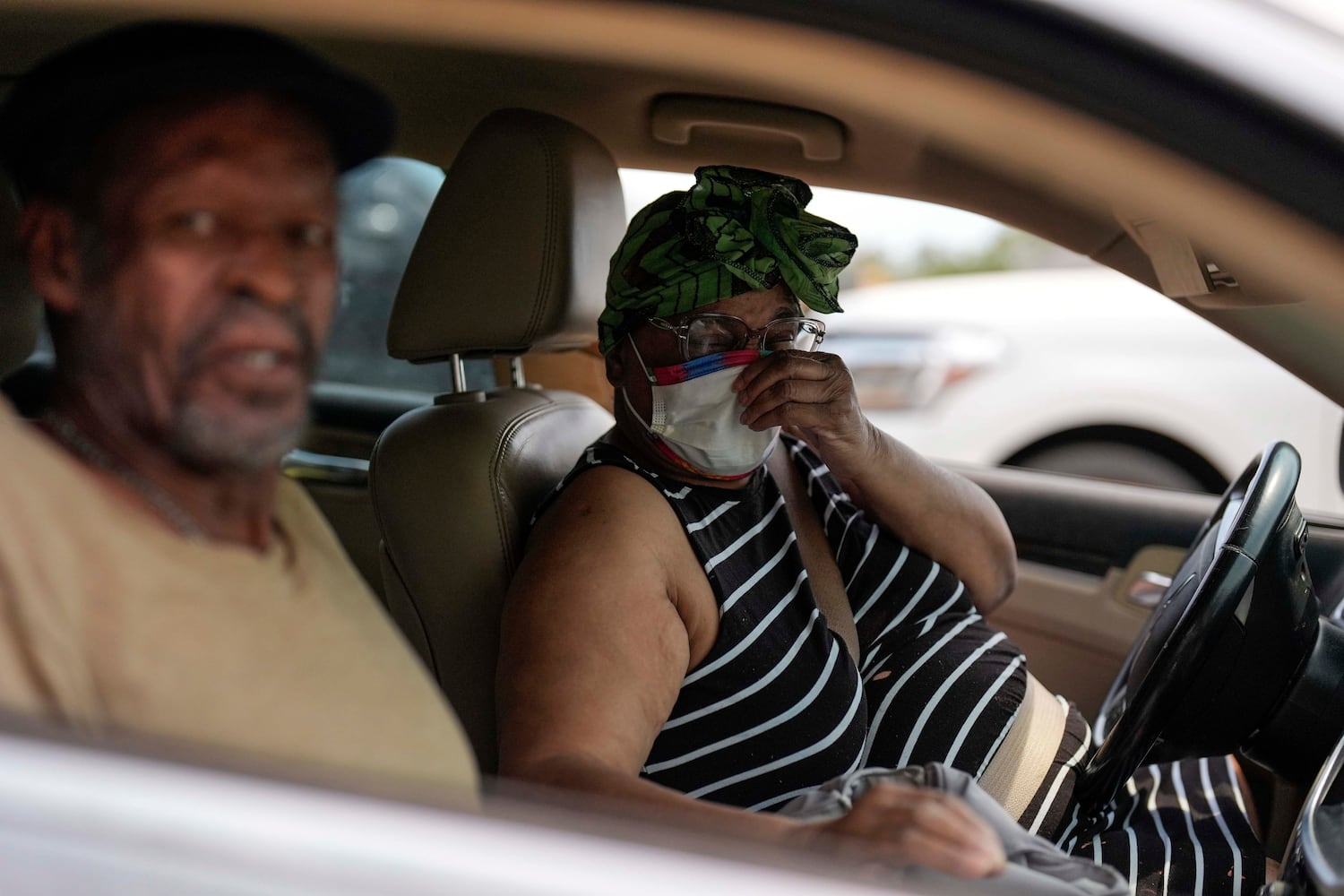
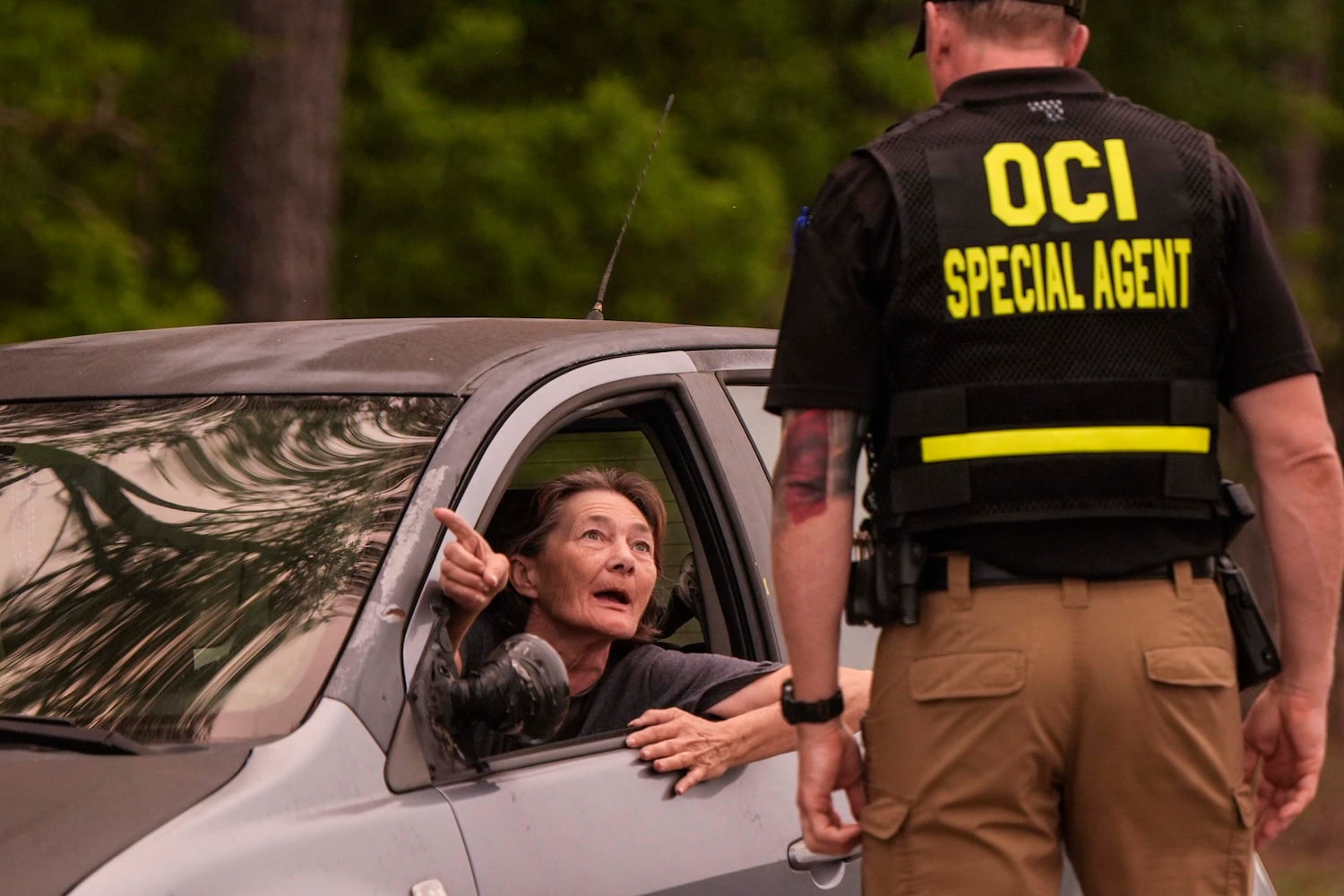
The fires, separated by 60 or so miles on either side of the Okefenokee Swamp, have destroyed forestland in Echols and Clinch counties and, toward the Atlantic coast in more populated Brantley County, wreaked havoc on neighborhoods as shifting winds have prompted evacuations.
The governor said rain over the weekend helped fire crews tamp down the flames.
“It allowed us to gain some ground, and everybody’s feeling really good about that,” Kemp told reporters at a news conference in the Ware County town of Manor, about halfway between Waycross and Homerville. “We’re definitely not out of the woods, but (we’re) feeling a lot better.”
The National Weather Service also predicted Wednesday through Sunday could bring 1-3 inches of rainfall to southeast Georgia, although authorities say that wouldn’t be enough to extinguish the twin blazes.
Forestry officials on Tuesday said the fire in Clinch and Echols counties, east of Valdosta and not far from the Florida border, where about 165 firefighters were deployed, had so far scorched 32,541 acres and burned one structure.
That blaze, known as the Pineland Road Fire, was 23% contained. It started April 18 and began when a farmer was welding a gate.
“He tried to put it out,” Kemp said. “When he couldn’t, I’m told, he immediately called 911 — did exactly what you should do. … They just couldn’t get it contained.”
The other fire, known as the Highway 82 Fire, in Brantley County had engulfed 22,600 acres and was 32% contained. Authorities blame a foil-like party balloon that hit a power line and caused an electric arc, igniting surrounding vegetation.

Credit: AP
Credit: AP
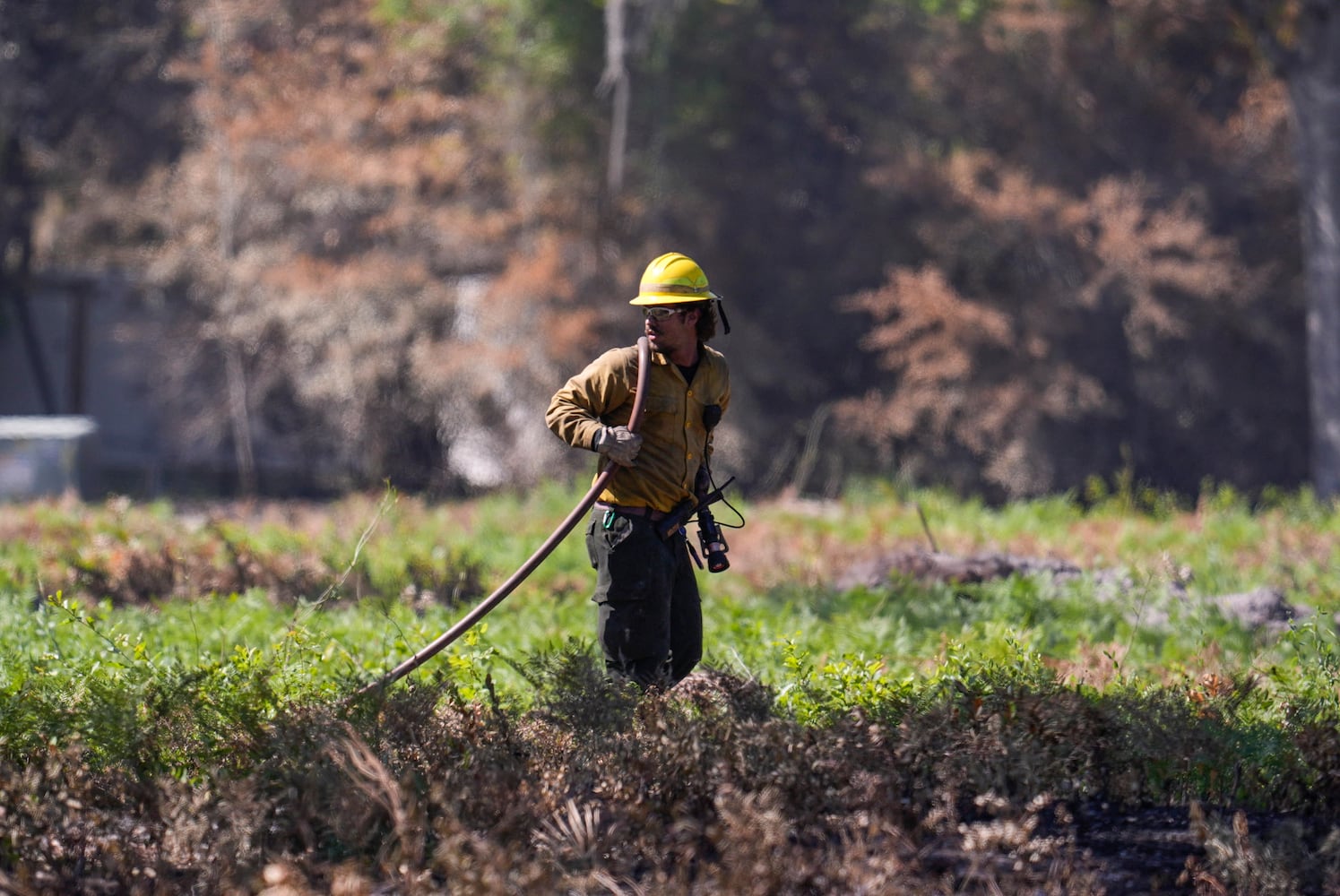
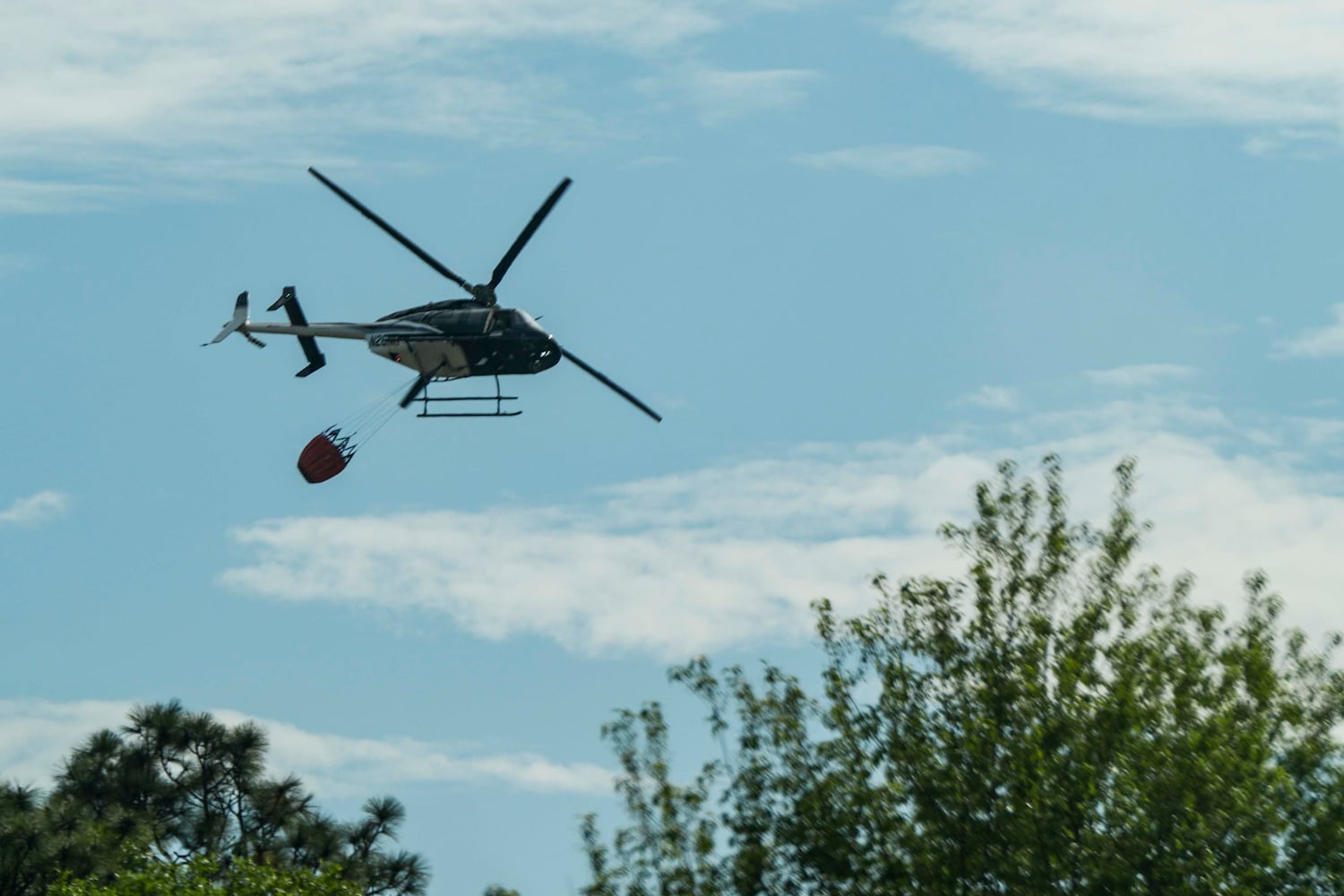
Nearly 450 firefighters were battling those flames, aided by tanker aircraft that, in 285 flight hours, had doused the fire with more than 320,000 gallons of retardant.
Johnny Sabo, director of the Georgia Forestry Commission, explained at the news conference that when officials refer to a fire’s containment, it doesn’t mean that much of the fire is necessarily extinguished. “That just means it’s in a place to where we don’t have to pay it as much attention,” Sabo said.
He added that there was “a long way to go” and he won’t feel comfortable until the containments hit 90%. When that might be remained unclear, but it could be many weeks as the state contends with its worst drought in two decades.
Said Kemp: “We’re going to be dealing with this for quite a while.”
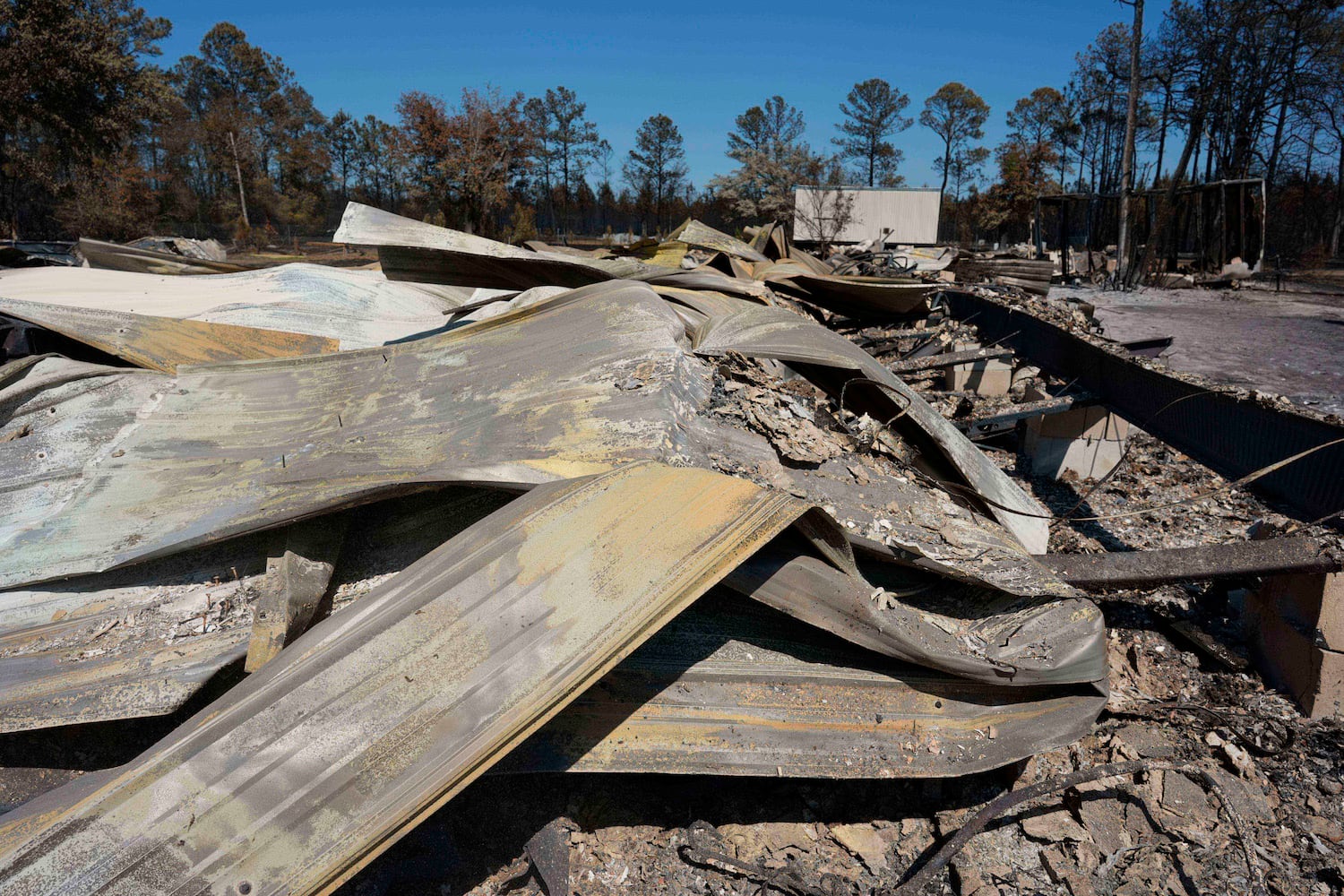
The governor also spoke of the wildfires’ emotional toll and how some of the structures destroyed in Brantley were so burned that “we can’t really tell if it’s an outbuilding or somebody’s house.”
Kemp said estimates are still “fluid” on the number of homes affected. Authorities estimated Tuesday that 82 homes and four commercial structures have been destroyed in the Brantley fire; another 17 structures are being assessed. They estimated that just one residence has been destroyed in the Pineland blaze to date and that the only other structures burned were things like well houses, sheds or other outbuildings.
Kemp said he and his wife, Marty, in conversations with firefighters who’ve worked around the clock, had seen the hurt on their faces.
“It is heartbreaking for them,” the governor said. “We’ve seen it in their eyes, in their heart. But I’ll tell you, they are doing everything they can to try to save these homes.”
He said that from the air, it is remarkable to see the contrast of the blackened landscape halted around houses spared by firefighting efforts.
“As much devastation has come for these families,” Kemp said, “and as heartbreaking as that is ... we are so thankful for these brave people.”
About the Author



Keep Reading

The Latest

Featured